

James Chambers, better known as Jimmy Cliff, one of Jamaica’s most prolific and celebrated performers, and an inductee into the Rock and Roll Hall of Fame, has been hailed as the first true superstar of Jamaican music. As a uniquely gifted singer-songwriter, Cliff was among the earliest artists to bring reggae to a global audience. With more than 25 studio albums to his credit, he was the only living musician to have received the Jamaican government’s Order of Merit for his contributions to national culture. Yet his path to international acclaim was far from straightforward. Born James Chambers in Adelphi, a small, rural town on Jamaica’s north coast near Montego Bay, Cliff’s early life was marked by poverty, controversy, and prejudice.

Following the dissolution of his parents’ marriage, Cliff and his older brother were raised by their father, a Pentecostal Christian, in a modest two-room shack. When Hurricane Charlie destroyed their home in 1951, Cliff was forced to live for a time with his aunt and grandmother on a nearby farm. At Somerton All Age School, his intelligence was quickly recognized by a teacher who recommended that he pursue studies in electronics at Kingston Technical High School. Moving to Jamaica’s capital of Kingston in the late 1950s, Cliff began studying electronics while simultaneously entering talent contests under the stage name Jimmy Cliff.

Cliff’s appearance at the 1964 World’s Fair in New York brought him to the attention of Island Records founder Chris Blackwell, who brought him to London two years later and promoted him as a soul singer, backed by musicians who would later form Mott the Hoople. Even before Bob Marley’s international breakthrough in the 1970s, Cliff introduced Jamaican rocksteady to U.S. audiences through his starring role in the 1972 cult classic film The harder they come. His portrayal of Ivan in the groundbreaking film drew on elements of his own youthful experiences. The film’s soundtrack became a reggae primer for many listeners unfamiliar with the genre, with Cliff contributing four songs, including his enduring You can get it if you really want, which reached number two on the U.K. singles chart; the title track, The harder they come; and the soulful ballad Sitting in limbo.

Cliff was among the first Jamaican vocalists to relocate to London in pursuit of greater recognition. He also became one of the earliest artists to make a significant impact in South America and Africa, broadening his musical output to reach diverse audiences.

Cliff was also the first reggae singer to assume a leading role in a feature film (The harder they come) which introduced international audiences to Jamaica’s vibrant musical culture. His distinctive style of reggae, infused with non-Jamaican musical elements, resonated strongly in Africa, leading to performances in Nigeria in 1974 and a subsequent tour of West Africa three years later.
This according to Jimmy Cliff: An unauthorized biography by David Katz (Oxford: Signal Books, 2011; RILM Abstracts of Music Literature 2011-18440).
Jimmy Cliff passed away on 24 November 2025 at the age of 81.

Related Bibliolore posts:
https://bibliolore.org/2018/11/29/reggae-as-intangible-cultural-heritage/
https://bibliolore.org/2019/05/16/maldita-vecindad-and-activism/




Afrobeat, hip hop, and Nigerian activism
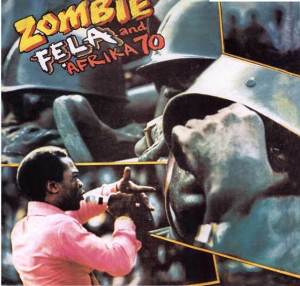
Nigerian music genres, particularly Afrobeat, have historically sparked social consciousness, with Fela Anikulapo Kuti as a prominent figure. His energetic performances aimed to confront oppressive regimes in Nigeria and beyond, addressing neocolonial influences from Western powers. Despite facing assaults and imprisonment, Fela remained dedicated to his enduring belief that an artist’s role extends beyond entertainment; it includes provoking public thought and raising awareness about social issues. His commitment to these ideals has left a lasting impact on the cultural and political landscape of Nigeria.
Fela remained a steadfast opponent of Nigerian military rulers until his death in 1997. While some musicians have attempted to carry the torch of his activist legacy, few have been able to mobilize a significant following or resonate with the public as he did. Other genres, like Nigerian hip hop, have often faced criticism for promoting misogyny, materialism, and hedonism. In contrast, Fela’s counterculture has evolved into a broader global movement, gaining traction alongside the rising international popularity of Nigerian hip hop, now widely recognized as “Afrobeats.”
One musician who has taken up this challenge is Falz (Folarin Falana), a dynamic Nigerian artist who combines humor with bold social commentary in his music. Like Fela, he uses his art to spotlight societal issues and foster awareness aimed at inspiring positive change. The son of renowned human rights lawyer Femi Falana and his wife, Funmi Falana, a lawyer and advocate in her own right, Falz initially trained as a lawyer before pursuing music, reminiscent of Fela’s own journey. Gaining fame through humorous social media skits that critique everyday Nigerian life, Falz’s music has evolved to address pressing social problems, urging ordinary Nigerians to recognize their role in perpetuating state repression and to advocate for change.
Falz initially garnered attention as a humorist on social media, creating skits that satirize everyday Nigerian life. As his music career progressed, his performances became more impactful, drawing inspiration from Fela both musically and politically. In his songs, Falz tackles pressing social issues in Nigeria and encourages listeners to actively resist and advocate for change. Notably, Falz emphasizes the collective responsibility of ordinary Nigerians, highlighting how the broader populace contributes to the state repression faced by citizens.
This according to “Re-imagining Afrobeat(s): Juxtaposing Fela and Falz’s social commentary and lyrical activism”, by Paul Ayodele Onanuga (African identities 23/3 [2025] 584–603; RILM Abstracts of Music Literature, 2025-1229).
Below are two Falz music videos.
Comments Off on Afrobeat, hip hop, and Nigerian activism
Filed under Africa, Performers, Politics, Popular music
Tagged as Africa, Afrobeat, Hip hop, Hip hop music, Humor, Nigeria, Politics, Rap music, social commentary