Bee imagery has long been a prominent element in song titles and lyrics. Bumble boogie: 100 years of bee imagery in American sound recordings—A discography by William L. Schurk and B. Lee Cooper (Popular music and societyXXXIV/4 [October 2011] pp. 493–502) explores several bee themes featured in more than 200 commercial recordings released in the U.S. during the past century.
Themes cited include references to scent, terms of endearment, analogies to bee-related structures and hive-oriented treasures, allusions to romance, sexuality and reproduction, and fears of physical pain and emotional rejection. The discography features recordings released over the past ten decades either as singles (45 or 78 rpm records) or as songs compiled in albums (33⅓ rpm records) or on compact discs.
Below, the sublime Muddy Waters with his classic Honey bee.
During his lonely years as a young traveling performer and teacher in northern Germany, Ferruccio Busoni adopted a Newfoundland for companionship; he named the huge black dog Lesko. When he sailed to Helsinki to begin his first steady teaching position in 1888, of course Lesko came along.
Busoni’s lively personality and prodigious performing skills soon attracted a group of artists who gathered regularly at bars and restaurants. Since his dog always attended these meetings, they declared Lesko the honorary convener and dubbed themselves the Leskovites. This group included Jean Sibelius, the writer Adolf Paul, the conductor Armas Järnefelt, and his brother, the painter Eero Järnefelt.
In 1890 Busoni expressed his regard for the Leskovites with his Geharnischte suite, op. 34a; each movement is dedicated to one of “the four friends of Lesko in Helsinki.”
This according to “The friends of Lesko, the dog: Sibelius, Busoni, Armas and Eero Järnefelt, Adolf Paul” by Barbara Blanchard Hong, an essay included in Sibelius in the old and new world: Aspects of his music, its interpretation, and reception (Frankfurt am Main: Peter Lang, 2010, pp. 57–68).
Below, Busoni’s suite dedicated to the Leskovites.
The article, which can be read online here, was published in American entomologist (L/3 [fall 2004] pp. 142–151). It is part of a larger project called Insects in rock ’n’ roll music, which also includes lists of insect-related songs, albums, and artist names.
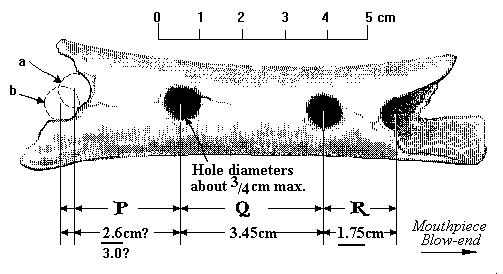
In 1996 Mira Omerzel-Terlep reported that a bone fragment excavated at the Divje Babe I cave site in Slovenia is considered to be the oldest man-made flute, dating from 45,000 years ago (“Koščene piščali: Pričetek slovenske, evropske in svetovne inštrumentalne glasbene zgodovine” [Bone whistles: Origins of the Slovenian, European, and world history of instrumental music], Etnolog: Glasnik Slovenskega Etnografskega Muzeja/Bulletin of the Slovene Ethnographic Museum VI, pp. 235–294). Further studies sought to demonstrate that the fragment had originally belonged to an instrument capable of producing a diatonic scale.
Other researchers were skeptical, though, and in 1998 Paola Villa et al. tried to put the speculation to rest, showing that the holes in the bone were the results of gnawing by animals (“A Middle Paleolithic origin of music? Using cave-bear bone accumulations to assess the Divje Babe I bone ‘flute’”, Antiquity LXXII/275 [March], pp. 65–79).
The argument has not abated. In 2002 a pair of essays staking out the opposing camps was issued in Archäologie früher Klangerzeugung und Tonordnung/The archaeology of sound origin and organization; Musikarchäologie in der Ägäis und Anatolien/Music archaeology in the Aegean and Anatolia (Rahden: Leidorf); April Nowell states that the results of taphonomic testing offered no viable proof that the bone fragment was an instrument (“Is a cave bear bone from Divje Babe, Slovenia, a Neanderthal flute?” pp. 69–81) while Robert Fink presents research supports the theory that it was (“The Neanderthal flute and origin of the scale: Fang or flint? A response” pp. 83–87).
More recently, an exhaustive study by Cajus G. Diedrich of Paleo-Logic, Independent Institute of Geosciences, ends with the conclusion that “The ‘cave bear cub femora with holes’ are, in all cases, neither instruments nor human made at all” (Royal Society Open Science, 2 : 140022; the paper can be read in full here).
Still, the controversy is alive and thriving on the Internet.
Below, Ljuben Dimkaroski performs on a reconstruction of the alleged original bone flute.
Along with its wide-ranging discussions of theoretical topics, the 1650 treatise Musurgia universalisby the German Jesuit polymath Athanasius Kircher (1602–1680) includes what may be the first transcriptions of bird songs.
The illustration gives the nightingale’s song followed by those of the chicken, the cuckoo, the quail, and the parrot; the latter says χαίρε (“hello”). Vox cuculi is notated as the familiar falling minor third heard in cuckoo clocks (see below).
A facsimile edition of the treatise has been issued by Georg Olms (Hildesheim, 1970; reprinted 2006).
“Spatial performance as a function of early music exposure in rats” (Third triennial ESCOM conference: Proceedings [Uppsala: Uppsala Universitet, 1997], pp. 688–694) reports on an experiment in which 90 rats were randomly assigned to one of three groups: The Mozart group (30 rats) was exposed to a Mozart piano sonata 12 hours a day for 21 days in utero and 60 days after birth. The Glass and White Noise groups were similarly exposed to the music of Philip Glass or to white noise. The rats’ spatial performance in a 12-unit T maze was then assessed; the Mozart-bred animals ran significantly faster and made significantly fewer errors than the Glass-bred or white noise-bred animals.
“Spatial performance as a function of early music exposure in rats” (Third triennial ESCOM conference: Proceedings [Uppsala: Uppsala Universitet, 1997], pp. 688–694) reports on an experiment in which 90 rats were randomly assigned to one of three groups: The Mozart group (30 rats) was exposed to a Mozart sonata for 12 hours a day—21 days in utero and 60 days after birth. The Glass and White Noise groups were similarly exposed to the music of Philip Glass or to white noise. The rats’ spatial performance in a 12-unit T maze was then assessed, and the Mozart-bred animals ran significantly faster and made significantly fewer errors than the Glass-bred or white noise-bred animals.
Besides his training as a graphic artist, Jean Paucton, the prop man at the Palais Garnier in Paris, studied beekeeping at the Jardin du Luxemboug. In the mid-1980s he ordered his first hive, which was delivered to him at the Opéra, sealed and full of bees. He had intended to take it to his country house north of Paris, but when his plans changed the building’s fireman—who had been raising trout in a huge firefighting cistern under the building—advised him to place them on the seventh-floor roof at the back of the Palais Garnier.
Paucton gradually increased the number of hives to five, and from approximately 75,000 bees he annually collects about 1000 pounds of honey, which he packages in tiny jars, each with the label “Miel récolté sur les toits de l’Opéra de Paris, Jean Paucton”.
Thanks to the concentration of fragrant flowering trees and shrubs at the Bois de Boulogne, the chestnut trees in the Champs Élysées, and the linden trees in the Palais Royal, his honey has an intense floral flavor; it is sold at the Opéra’s gift shop and at the Paris gourmet shop Fauchon.
Launched by Intellect in 2010, Horror studies (ISSN 2040-3275) is an interdisciplinary journal devoted to research on cultural manifestations of horror, including the familiar forms it assumes in literature and film as well as its expressions in fashion, dance, fine art, music, and technology. The journal’s editors write that it “aims to extend both the formal study and the informal appreciation of horror into hitherto overlooked critical terrains, seeking in the process to appeal not only to the international academic community, but also to enthusiasts of the horror mode more generally.”
The inaugural issue of Horror studies includes “Of submarines and sharks: Musical settings of a silent menace” by Linda Maria Koldau, an essay that explores how film composers have depicted the primal fear of the silent monster stealthily approaching from the depths.
Cows respond strongly to changes in the muted, subliminal strata of the cowshed soundscape; the elimination of such sounds, or their masking through music and other designed sound foregrounds, causes pronounced disturbances in the animals’ physiology and behavior.
A positive soundscaping for cowsheds must take advantage of the subjective implications of sounds such as the first moo of a newborn calf, which carries the strongest psychological impact even if it cannot be described as aesthetically beautiful.
This according to “The blessed noise and little moo: Aspects of soundscape in cowsheds” by Maru Pöyskö, an essay included in Soundscapes: Essays on vroom and moo (Tampere: Tampereen Yliopisto, Kansanperinteen Laitos, 1994). Below, a newborn calf demonstrates the little moo.
Franz Niemetschek’s legendary report that La clemenza di Tito was composed in 18 days was not seriously challenged until 1960, when Tomislav Volek published important archival materials relating to the chronology of the opera’s composition. Physical evidence from the autograph manuscript, including the remains of a fly squashed on the paper (probably by the composer in the heat of August), contributes to discrediting the hypothesis that Mozart’s work had begun before he signed his July 1791 contract for the opera.
This according to “The chronology of Mozart’s La clemenza di Tito reconsidered” by Sergio Durante (Music & letters, 80, no. 4 (Nov 1999): 560–594), where the evidence is described thus:
“On folio 114 of the autograph . . . a thick black spot in the shape of a cross is found. . . . On direct and close examination, the centre of the spot proves to host the remains of a fly (a kind of evidence not often found in music sources!). After a long reflection, my best guess is that the fly was smashed under the loose bifolium at the very time of composition, after it had unduly annoyed Mozart at work; he also provided a witty ‘service’ to the insect by marking a cross over it (‘requiescat’!); in any case, such was the force and determination of the action, combined with the gluing action of the ink, that the corpse is still stuck on the page after two hundred years of musicological investigations.” (p. 574)
The Indian singer Jayashri Ramnath (better known as Bombay Jayashri) was introduced to Karnatak music in her early childhood, influenced by her parents’ roles as music teachers. Jayashri began her performing career at the age of 28, and having grown … Continue reading →
The country singer, songwriter, actor, and businesswoman Dolly Parton was the fourth of twelve children in a family of sharecroppers in Sevierville, Tennessee, located in the Appalachian Mountains. Commenting on her childhood, Parton once said, “Everybody where we grew up … Continue reading →
Women have been part of hip hop expression from its early days, primarily as part of MC crews such as the Funky Four Plus One and Sugar Hill’s female group, Sequence. For most of hip hop’s recorded history, however, women … Continue reading →
The music of Central America tends to borrow heavily from the music of Mexico to the north, Colombia to the south, and the Caribbean Islands to the east, and, in the case of Nicaragua, from the politically motivated nueva canción … Continue reading →