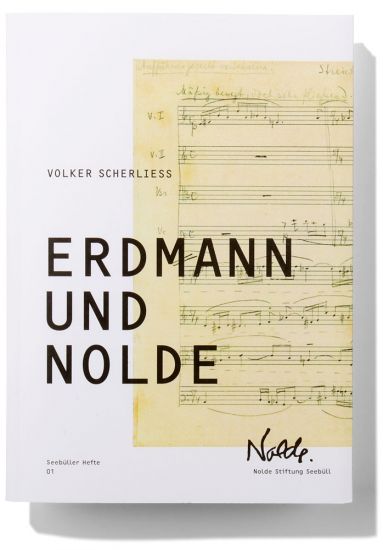
In 2009 the Nolde Stiftung Seebüll in Neukirchen, Germany, inaugurated the series Seebüller Hefte with Volker Scherliess’s Erdmann und Nolde, which documents the friendship between the artist Emil Nolde and the pianist Eduard Erdmann (1896–1958). The foundation’s museum occupies the house that Nolde designed for himself in 1927; it is now devoted to exhibitions of his works.
Category Archives: Visual art
Libretto illustrations
Illustrated libretti for eighteenth-century opera performances comprise a specific and unusual type of visual art. Since these engravings were made before the performances, they cannot be interpreted as objective documentation—indeed, clear evidence points to discrepancies between these representations and what the audiences actually saw. Rather, they must be seen as conveying the intention of these occasions, in surprisingly subtle ways.
Christine Fischer demonstrates this way of reading libretto illustrations in “Engravings of opera stage settings as festival books: Thoughts on a new perspective of well-known sources” (Music in art XXXIV/1–2 [2009], pp. 73–88). In the above engraving by Johann Benjamin Müller of the final scene in Maria Antonia Walpurgis’s Talestri, regina delle amazzoni (1760), Fischer notes that the wide gap between the female Amazons and the male Scythians—their leaders both with drawn swords—demonstrates their opposition, but the bridge in the background indicates their impending reconciliation. The message below the surface involves reassurance that the composer’s ongoing consolidation of her political power in Dresden will be beneficial to all, and that her rule will be based on a deep knowledge of state affairs and peaceful collaboration with powerful men.
Comments Off on Libretto illustrations
Filed under Classic era, Dramatic arts, Literature, Opera, Politics, Reception, Visual art
Cartoons
Cartoonists have always recognized music as a rich source for humor. The mere inclusion of an accordion or a banjo can make a situation comical, as Gary Larson’s The far side has repeatedly demonstrated, and caricatures of musicians have long been a staple of popular journalism.
The self-taught French cartoonist Jean-Jacques Sempé (b.1932) has been drawn to musical subjects throughout his career; The musicians, a collection of his characteristically nuanced and captionless music-themed drawings, was published by Workman in 1980, and Phaidon Press issued a similar collection of postcards in 2006. Sempé’s cartoons, many with musical subjects, have graced nearly 100 covers of The New Yorker.
Filed under Humor, Visual art
Operas as graphic novels
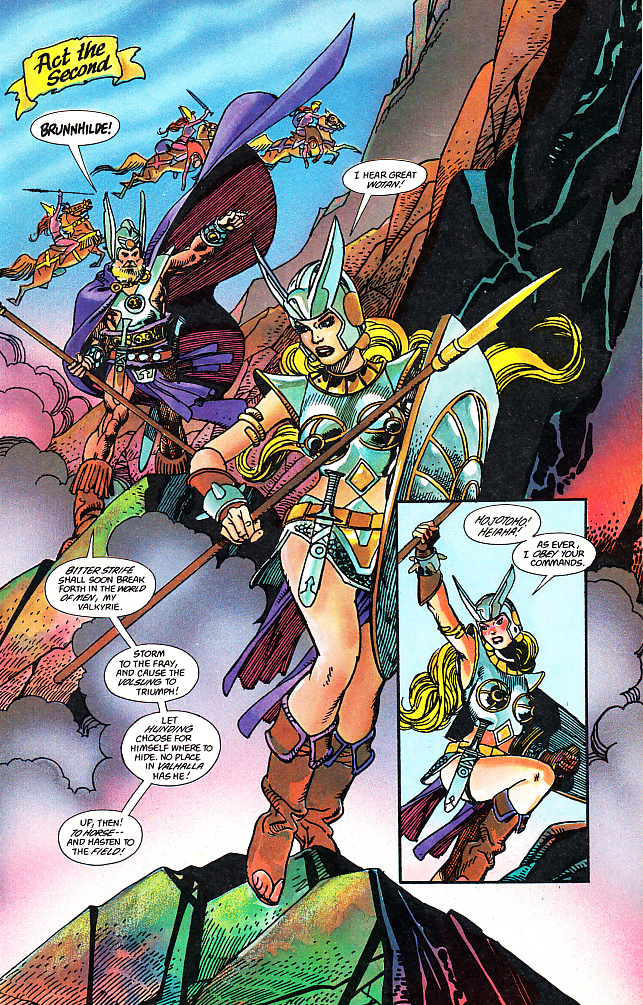
With their dramatic action and vivid characters, operas have inspired a number of graphic novels, including books by P. Craig Russell and a series (now out of print) produced in collaboration with England’s Royal Opera House. The most noteworthy examples of this genre are not just illustrations of libretti; they are autonomous works of art in the graphic novel tradition.
Wagner’s Der Ring des Nibelungen is particularly suited to the treatment it receives in The ring of the Niebelung by Roy Thomas and Gil Kane; set in a mythological time, with illustrious characters who can alter their physical forms, defy gravity, and survive without oxygen, it fits naturally into the medium’s world of fantasy and superheroes.
In some cases this drammata in pittura brings a powerful new dimension to Wagner’s drammata in musica—for example, the action that the audience must imagine during the Vorspiel of Die Walküre is fully depicted over the course of four textless pages. The cycle was first published in four installments by DC Comics.
Above, the opening of Act II of Die Walküre (click to enlarge); below, part of the 2011 production by the Metropolitan Opera.
Related article: The Ring recast
Comments Off on Operas as graphic novels
Filed under Dramatic arts, Opera, Publication types, Romantic era, Visual art