Category Archives: Curiosities

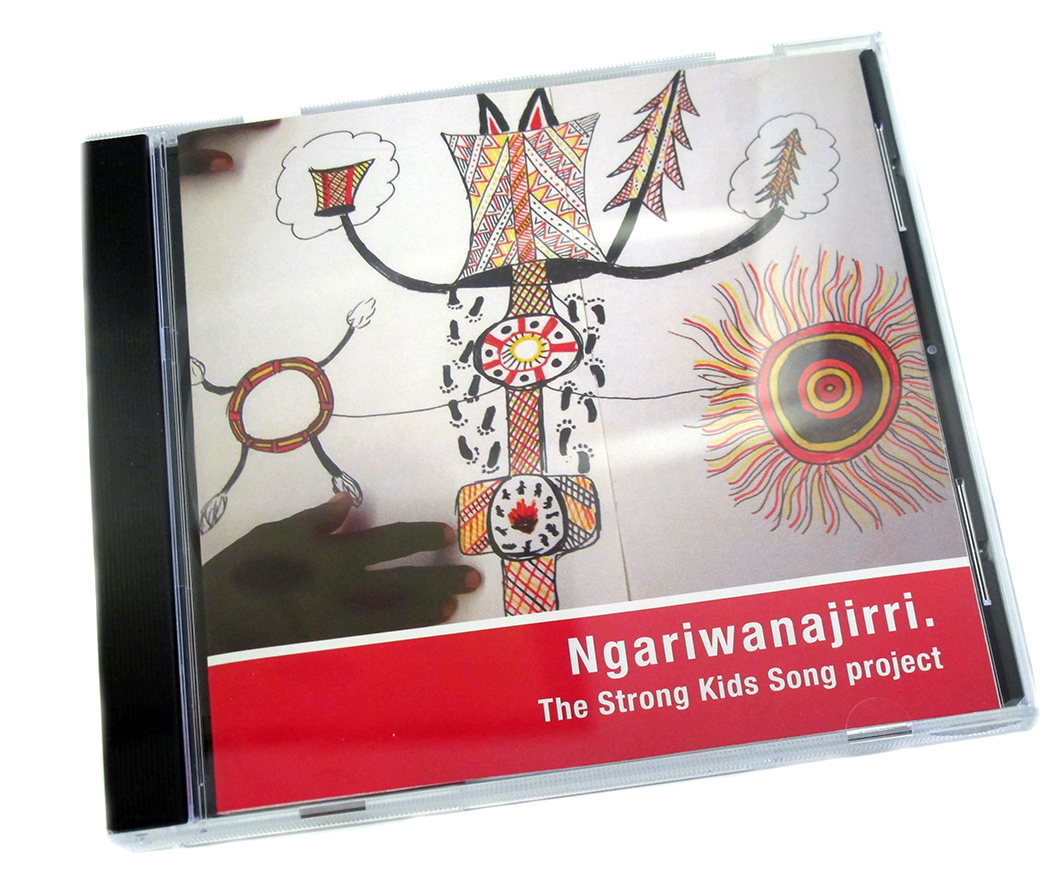
Ngariwanajirri (Strong kids song)

Ngariwanajirri

The Strong Women from the Tiwi Islands (northern Australia) are concerned that young Tiwi people are straddling two cultures, losing their language and their Tiwi identity.

To address this problem, the women and their grandchildren have composed a song that emphasizes connection to the ancestors, to country, to language, and to the elders. With lyrics in English, traditional Tiwi song language, and the contemporary spoken language, and with a hip-hop dance-mix sampling an ethnographic recording made in 1912, Ngariwanajirri (Strong kids song) is an example of new music helping to preserve tradition.

This according to “Ngariwanajirri, the Tiwi Strong kids song: Using repatriated song recordings in a contemporary music project” by Genevieve Campbell (Yearbook for traditional music XLIV [2012] 1–23).

Below, a music video of Ngariwanajirri; the song changes dramatically around 2:00.

Comments Off on Ngariwanajirri (Strong kids song)

Filed under Australia and Pacific islands, Curiosities, Popular music

The chromochord

chromochord

The chromochord is a bioelectronic musical instrument that is driven by protein expansion and contraction.

Linked to a laptop computer, the device holds 12 vials, each paired with a different sound. When light shines on one vial the proteins inside swell, changing the wavelength they absorb. A sensor measures the change in absorption and cues the sounds. As one set of proteins slowly expands, the chromochord emits the deep thrum of a bass; as another set quickly shrinks, out comes the sound of glass chimes.

The chromochord was developed by  Josiah Zayner, a biophysicist at the University of Chicago, and the composer Francisco Castillo Trigueros. “Scientists see beauty in a well-crafted experiment,” Zayner says. “The chromochord allows other kinds of people to experience that beauty.”

This according to “Biotech’s first musical instrument plays proteins like piano keys” by Nona Griffin and Daniel Grushkin (Scientific American 3 September 2013). Below, a sequence of related and unrelated images is accompanied by the chromochord.

Comments Off on The chromochord

Filed under Curiosities, Instruments

Filksongs

filking

While they existed in the 1950s, filksongs—songs sung by North American science fiction fans at their conventions—came into their own in the 1970s. Most fans learn these songs orally, and many copy them into notebooks, as some traditional singers have done with their repertoires.

Filksongs fall into three groups: parodies of traditional songs, nonparodies set to familiar tunes, and songs whose texts and tunes are both original. The texts may be about general science-fiction topics; specific films, shows, or books; or the joys and sorrows of fandom.

This according to “Filksongs as modern folk songs” by Edith Fowke (Canadian folk music bulletin/Bulletin de musique folklorique canadienne XXIII/2 [June 1989] pp. 3–7). Below, a brief documentary about filking.

1 Comment

Filed under Curiosities, Humor

Rameau’s American dancers

Rameau by J.-J.Caffieri, 1760

The 1725 account in Mercure de France of two Native Americans dancing at a Paris theater provides a detailed link between the large corpus of earlier European descriptions of New World music and the composition of Rameau’s harpsichord piece Les sauvages.

The account and the composition constitute a significant episode in the prehistory of ethnomusicology. Rameau’s detailed characterization of the Indians’ performance in the piece develops initiatives by 17th-century French musicians, and his later operatic use of Les sauvages in Les Indes galantes mirrors the ambiguities of Europe’s response to the Americas in the 18th century.

This according to “Rameau’s American dancers” by Roger Savage (Early music XI/4 [October 1983] pp. 441–52).

Today is Rameau’s 330th birthday! Above, the 1760 bust of the composer by Jean-Jacques Caffieri (click to enlarge); below, his Rondeau des Indes Galantes, which is based on Les sauvages.

Related article: Ballet and sauvagerie

Comments Off on Rameau’s American dancers

Filed under Baroque era, Curiosities

Hens, noise, and music

Barn_hens

Two experiments explored the effects of specific sound stimuli on laying hens.

The first measured heterophil to lymphocyte ratio and tonic immobility duration in 216 36-week-old hens exposed to specific noise stimuli of 65 dB (background chicken vocalizations and fans, control) or 90 dB (background noises plus truck, train, and aircraft noises) for 60 minutes. The measurements showed that the hens exposed to 90 dB noise were more stressed and fearful than control hens.

The second experiment measured heterophil to lymphocyte ratio and tonic immobility duration in 108 36-week-old hens exposed to background noises (65 dB) or to classical music plus background noises (75 dB) between 9.00 and 14.00 for three days. The measurements showed that the hens exposed to classical music were more fearful than control hens.

Overall, the results indicate that loud noise causes stress and fear in laying hens, and classical music influences their fearfulness.

This according to “Effects of specific noise and music stimuli on stress and fear levels of laying hens of several breeds” by José Luis Campo Chávarri, et al. (Applied animal behavior science XCI/1–2 [May 2005] pp. 75–84. Below, Ravel’s orchestration of Musorgskij’s Балет невылупившихся птенцов (Ballet of the unhatched chicks).

Related articles:

Comments Off on Hens, noise, and music

Filed under Animals, Curiosities, Science

Dance Your PhD


In 2008 Science magazine and the American Academy for the Advancement of Science hosted the first ever Dance Your PhD Contest in Vienna.

Calls for submission to subsequent annual Dance Your PhD contests followed suit, attracting hundreds of entries.

For these contests, practitioners transform their bodies into animating media and conduct body experiments to test their hypotheses. This body-work offers a medium through which they can communicate the nuanced details of their findings among students and colleagues. The Dance Your PhD contests expand and extend what it is possible for scientific researchers to see, say, imagine, and feel.

This according to “Dance Your PhD: Embodied animations, body experiments, and the affective entanglements of life science research” by Natasha Myers (Body & society XVIII/1 [2012] pp. 151–189). Above and below, the winning dance from 2017.

BONUS: John Bohannon, who started the contest, presents a TED talk about it here.

Comments Off on Dance Your PhD

Filed under Curiosities, Dance, Humor, Science

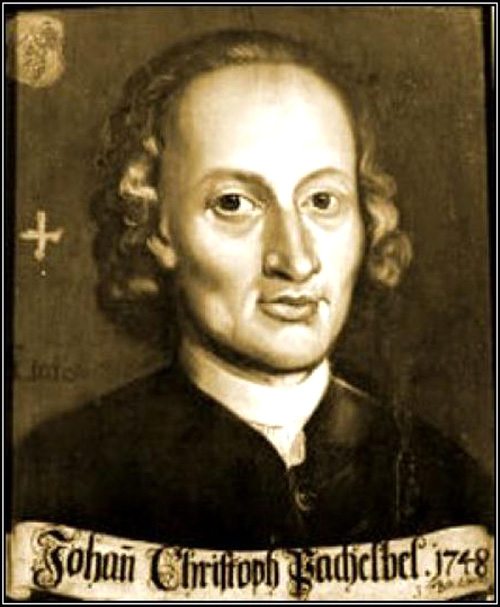
Pachelbel and immune response

pachelbel

In an experiment, 80 students were each randomly assigned to one of four treatment conditions: no treatment (control), music only, imagery only, and music and imagery combined.

The first group was asked to sit quietly for 17 minutes. The second group listened to a recording of Pachelbel’s D-major canon. The third treatment used directed imagery to help the subjects visualize the bone marrow, a primary source of lymphocyte production, and the radiation of cleansing lymphocytes to various areas of the body. The fourth treatment combined the music and the directed imagery.

The second, third, and fourth treatments resulted in significant increases in the subjects’ immune response. The fourth treatment, however, did not show a significant increase over those of the second and third.

This according to “The effects of music and biological imagery on immune response (S-IgA)” by Chung Tsao Chien, et al., an essay included in Applications of music in medicine (Washington, D.C.: National Association for Music Therapy, 1991, pp. 85–121.

Today is Pachelbel’s 360th birthday! Below, Rob Paravonian discusses other uses of the celebrated canon in D.

BONUS: The notorious rubber-chicken performance.

1 Comment

Filed under Baroque era, Curiosities, Science

Wayne Shorter’s punishment


In a 2012 interview, Wayne Shorter described a life-changing incident.

One day when he was in high school, Shorter, who was not a musician at the time, was called to the vice-principal’s office, “and there’s my mother and father, and they had all the forged letters I wrote, signing a doctor’s name, my parent’s name, and everything like that.”

“I was put in the music [theory] class because I played hooky, and the teacher was a disciplinarian—when people were talking in the back of the room, he took the chalk and threw it at them.”

“This teacher said that music could take form in three avenues. He had a record of a lady from Peru named Yma Sumac; she had that range—high octaves and all that stuff. Then he brought out another record, Igor Stravinsky’s The rite of spring, which is happenin’. The third record he pulled out was Charlie Parker. And then, when he was talking, I was thinking of a movie unfolding. And I was like, ‘I want to be in that movie.’”

This from “Moment to moment: A conversation with the Wayne Shorter Quartet” by Renee Rosnes (JazzTimes XLIII/2 [March 2013] pp. 22–27).

Today is Shorter’s 80th birthday! Below, performing in 1986.


1 Comment

Filed under Curiosities, Jazz and blues

St. Denis and Radha

isainyn001p1

Presenting a hyperbolization of categories of otherness through mapping markers of race, Orientalism, and sexuality onto the white middle-class female body, Ruth St. Denis’s Radha functions as a site of the condensation and displacement of desire.

In this work, St. Denis achieved a combination of Delsartism’s transcendent spirituality with the Oriental orgasmic in the spectacle of a goddess delirious with her own sexuality who chooses to renounce the powerful pleasure of her body for a chaste union with the transcendent.

This according to “Dancing out the difference: Cultural imperialism and Ruth St. Denis’s Radha of 1906” by Jane C. Desmond (Signs: Journal of women in culture and society XVII/1 [fall-winter 1991] pp. 28–49; reprinted in Moving history/dancing cultures: A dance history reader [Middletown: Wesleyan University press, 2001] pp. 256–270.

Above, St. Denis performing Radha in 1908; below, a documentary contextualizes the work in her career and influences.

Related post: Ted Shawn and Native American dance

2 Comments

Filed under Curiosities, Dance

Primate dance

lemur

The only clear difference between human dance and primate dancelike behavior is that the former is culturally patterned; otherwise, attributes only vary in terms of their complexity.

Dance, therefore, is not a human invention—it is a human variation on a primate theme.

This according to “The origins of dance: The perspective of primate evolution” by Sandra T. Francis (Dance chronicle XIV/2–3 [1991] pp. 203–220). Above, a lemur trips the light fantastic; below, the story behind a popular YouTube video.

Comments Off on Primate dance

Filed under Animals, Curiosities, Dance