Category Archives: Curiosities

Bach and personal conflict

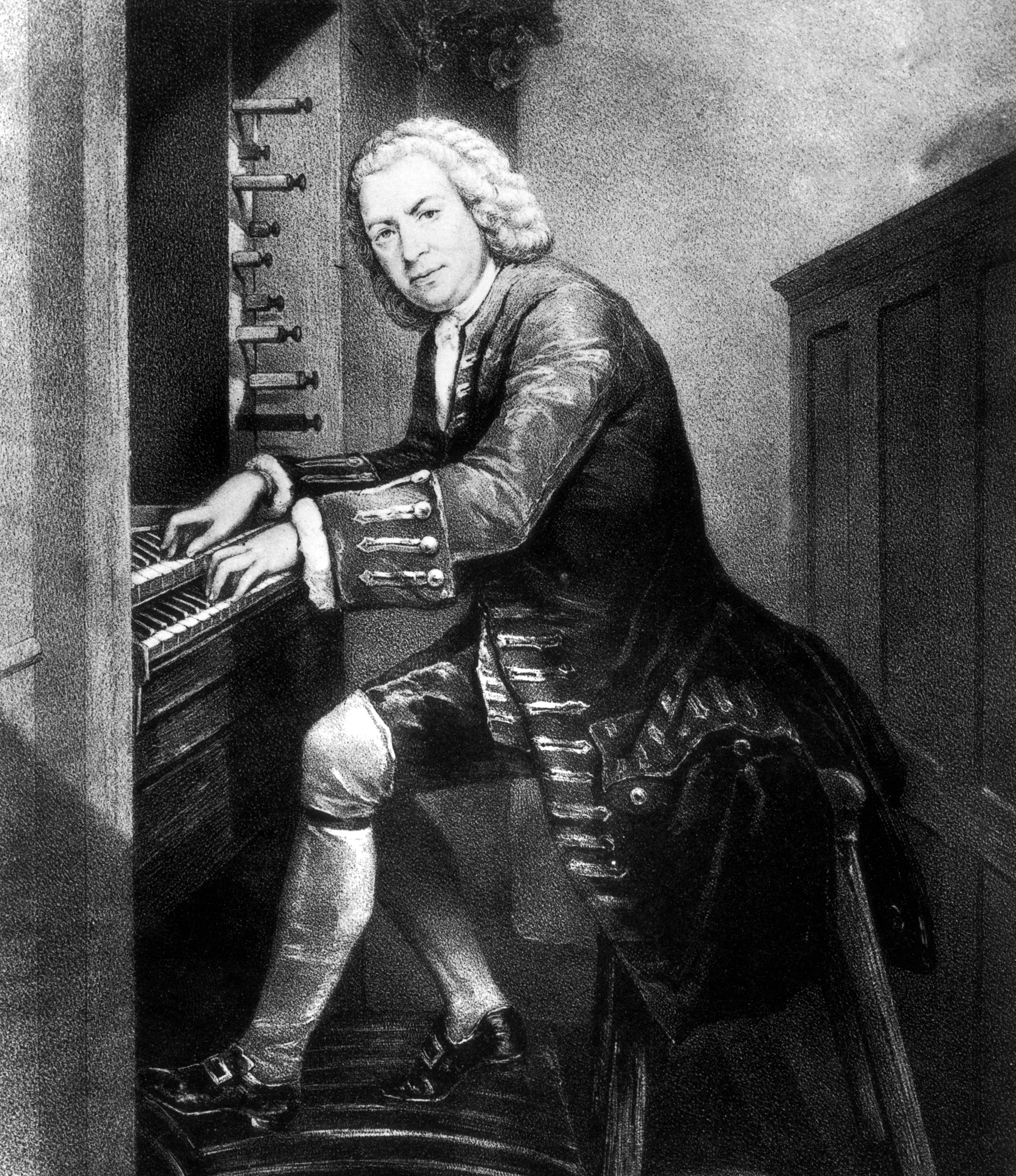
Johann Sebastian Bach

Bach’s life was shaken by several confrontations and traumatic events that had important repercussions on his personal and professional development.

One of the first documented conflicts with authority occurred when he was just nine years old, following the loss of both of Bach’s parents, when his brother Johann Christoph confiscated a manuscript that Sebastian had copied behind his back. When this event is conceptualized in terms of recent research on coping with trauma and trauma recovery, it reveals Bach’s sense of vulnerability to authorities and the establishment of a lifelong approach to resolving conflict.

Patterns of action throughout Bach’s early career reveal efforts towards autonomy and independence through outward resolutions of conflicts with authority. When he was in Leipzig the authorities’ lack of enthusiasm for music made him consider departing from this prestigious position. His previous conflicts with authorities resulted in just such a departure; however, his decision to stay in Leipzig reflects a different mode of conflict resolution, one that involves inward reflection rather than assertive confrontation.

This according to “From Ohrdruf to Mühlhausen: A subversive reading of Bach’s relationship to authority” by Sara Botwinick (BACH: Journal of the Riemenschneider Bach Institute XXXV/2 [2004] pp. 1–59).

Above, Bach as he may have appeared in the Thomaskirche in Leipzig; below, the beautifully reflective Ich habe genug, BWV 82, from February 1727, four years into his Leipzig tenure.

More posts about J.S. Bach are here.

2 Comments

Filed under Baroque era, Curiosities

From war tanks to church bells

Tanks

During their Revolution (1974–91) the Ethiopian penchant for not throwing anything away was, out of necessity, given full rein; ammunition boxes were converted to book satchels, artillery shells were made into pots and pans, and so on.

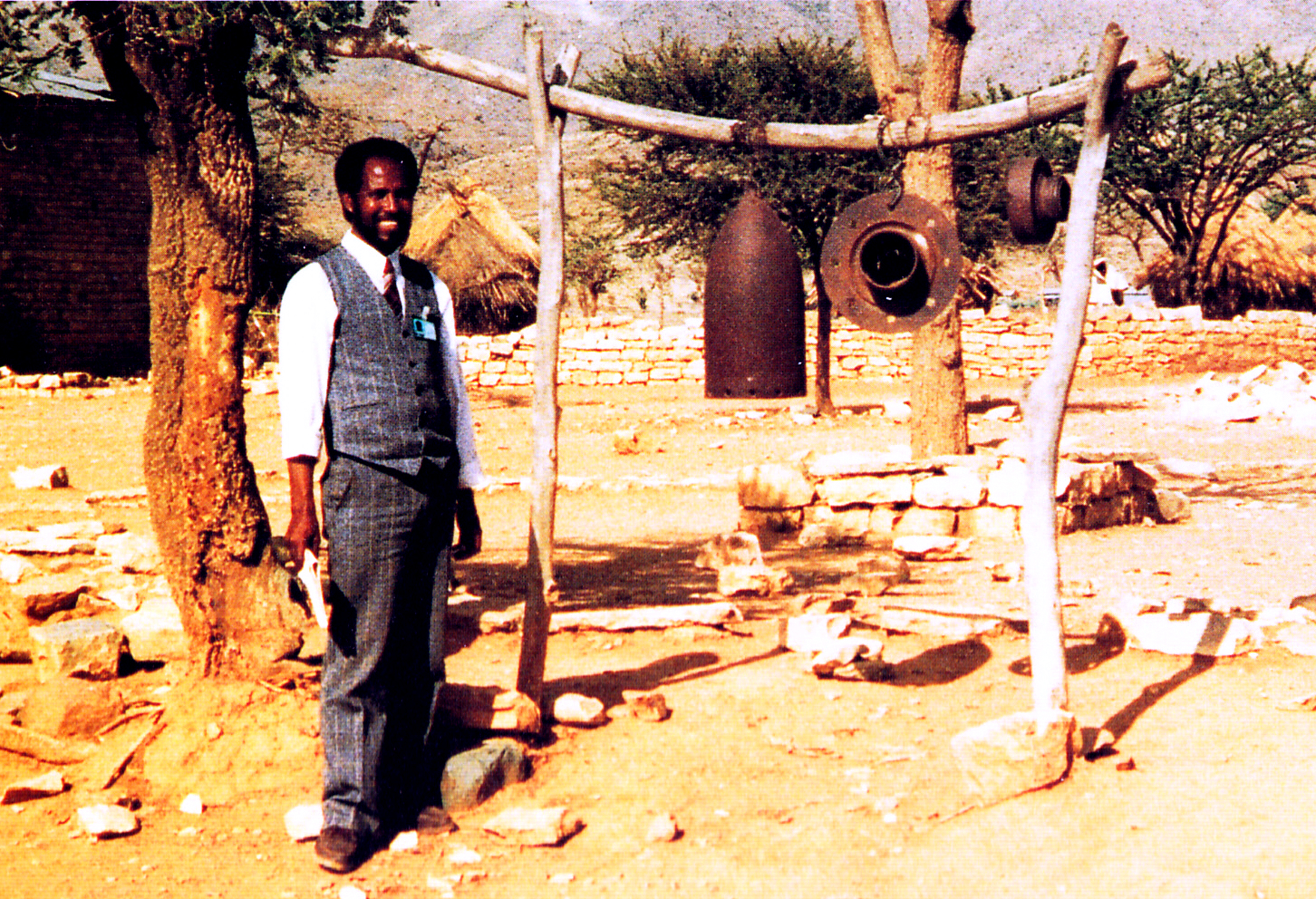
In one instance, a traditional three-piece gong ensemble associated with the Ethiopian Orthodox Christian Church was made from components of an abandoned Soviet-made tank; some 600 of these tanks were used in Ethiopia during the 1970s and 1980s. Struck by an acolyte using a small stone, the gongs mark the beginnings of services and other notable events.

This according to “Make army tanks for war into church bells for peace: Observations on musical change and other adaptations in Ethiopia during the 1990s” by Cynthia Tse Kimberlin, an essay included in Turn up the volume! A celebration of African music (Los Angeles: Fowler Museum of Cultural History, 1999, pp. 124–131).

Above, the bells in question; below, a comparable set of Ethiopian stone chimes (please turn your screen or head sideways).

Comments Off on From war tanks to church bells

Filed under Africa, Curiosities

The Sultan’s bagpipes

When he came to power in 1970, Sultan Qaboos bin Said of Oman began efforts aimed at modernization and reversing isolationism. Having graduated from an English military academy and served in a Scottish regiment, he had developed a taste for Western military band and Scottish bagpipe music.

During the 1970s and 1980s several military wind bands and bagpipe bands were founded at his command, with only Omani musicians allowed. The pressure to perform well was intense, and a high standard of musicianship was attained in a fairly short time.

Increasingly, efforts are being made to include Arabic music in the repertoire; bagpipes are considered particularly suitable, as their intervals match some Arabic scales better than those of wind band instruments.

Below, the Royal Army of Oman‘s pipe and drum band.

Related article: The Sultan’s pipe organ

4 Comments

Filed under Asia, Curiosities

Martha Graham and Freud


Martha Graham found Freud’s psychoanalytic ideas useful for making sense of both her personal life and the material to which she was drawn as a choreographer; they were particularly central to the creative process for her works based on Greek myths.

In Night journey (above), in which Oedipus’s mother and wife is forced by the blind seer Tiresias to relive the most painful moments of her life, Graham turns Jocasta into a powerful female protagonist by turning a straightforward linear narrative into a complex and difficult one, evoking the physically charged and taboo themes of eroticism, the maternal body, and death.

This according to “Dance, gender and psychoanalysis: Martha Graham’s Night journey” by Ramsay Burt (Dance research journal XXX/1 [spring 1998] pp. 34–53). Below, Graham herself dances in the opening of Alexander Hammid’s 1960 film of the work.

Related article: Herskovitz and Freud

3 Comments

Filed under Curiosities, Dance

A sea lion in Boogie Wonderland


Until now, vocal mimicry—what we might call the ability to sing along—has been held to be necessary for beat matching in non-human animals; but Ronan, a California sea lion, is helping scientists to determine what actually happens when we get our groove on.

In a series of experiments, Ronan learned to bob to the beats of three different pop and rock songs. To make certain the effect was real, a metronome that skipped beats was added. Ronan kept right on going, and proved capable of handling both novel tempos and complex musical stimuli; in other words, capable of flexible entrainment.

The results challenge current paradigms on the roles of vocal mimicry, spontaneity, and social learning in entrainment, and raise the possibility that the ability to learn beat matching may be widespread in the animal kingdom.

This according to “California sea lion (Zalophus californianus) can keep the beat: Motor entrainment to rhythmic auditory stimuli in a non vocal mimic” by Peter F Cook, Andrew Rouse, Margaret L. Wilson, and Colleen Reichmuth (Journal of comparative psychology 1 April 2013, pp. 7–16.

Below, Ronan gets down to Boogie Wonderland and other pop hits.


1 Comment

Filed under Animals, Curiosities

The Wonder violin

wonder violin

Although the Conn firm is best known as a maker of brass instruments, it produced violins, violas, and violoncellos for 30 years.

In 1897 Charles Gerard Conn engaged the Italian violin maker William V. Pezzoni to manage the new venture, and advertisements for the Wonder violin appeared even before production began.

Over a period of 18 years, more than 1200 Wonder violins were produced. However, when Carl D. Greenleaf bought the firm, he discovered that they were the slowest selling items in stock. By 1927, the obsolete and unprofitable manufacturing process was phased out and the overstock liquidated; advertisements announced that, due to technological advancements, the Wonder violin could now be sold for only $50.

This according to “C.G. Conn’s Wonder violin: The best violin on earth?” by Margaret Downie Banks (America’s Shrine to Music Museum newsletter XXIV/4 [August 1997] pp. 4–5.

Above, an original Wonder violin with its bow and case; below, a Wonder violin transcription.

Related article: The Hill bow

1 Comment

Filed under Curiosities, Instruments

The riot at the Rite

Le sacre 1913

Historians have based their explanations for the tumultuous 1913 première of Stravinsky’s Le sacre du printemps on the accounts (none published before 1935) of the participants—Stravinsky, Diaghilev, Nijinsky, and Monteux.

Due to these accounts, for years it has been believed that either the choreography or the revolutionary score was the cause of the riot in the audience, and that the uproar was a spontaneous reaction to the performance.

However, an examination of contemporary newspaper and journal reviews and an understanding of the personal and political characteristics of Sergei Diaghilev reveals that the riot was actually anticipated and encouraged by the management of the Ballets Russes. The earliest reviews published in Paris offer a wealth of material relating to cultural values of the age.

This according to “The riot at the Rite: Not so surprising after all” by Truman C. Bullard, an article included in Essays on music for Charles Warren Fox (Rochester: Eastman School of Music, 1979, pp. 206–211).

Today is the 100th anniversary of Le sacre’s premiere! Above, a photograph from the original Ballets Russes production; below, part of the BBC’s dramatization from 2009.

Related articles:

2 Comments

Filed under 20th- and 21st-century music, Curiosities, Dance

Thakur and Mussolini

thakur-mussolini

Near the end of his visit to Rome in 1933, the Hindustānī vocalist Omkarnath Thakur (1887–1968) received an invitation to dine with Mussolini; Il Duce had caught wind of Thakur’s theories and experiments regarding the inducement of emotional states by rāga performances, and he wanted a demonstration.

After a specially prepared vegetarian dinner, Thakur began with hindolam, which depicts valor. “When I was soaring in the high notes of the rāga,” he later recalled, “Mussolini suddenly said ‘Stop!’ I opened my eyes and found that he was sweating heavily. His face was pink and his eyes looked like burning coals. A few minutes later his visage gained normalcy and he said ‘A good experiment.’”

After Thakur brought him to tears with rāga chayanat, which is meant to depict pathos, Mussolini said, after taking some time to recover, “Very valuable and enlightening demonstration about the power of Indian music.”

Il Duce then returned the favor: Producing his violin, he treated Thakur to works by Paganini and Mozart. Again, both agreed on the music’s power to evoke emotion.

“I could not sleep at all the entire night,” the vocalist recalled, “wondering whether the meeting had really taken place; I thought it was a part of a dream.” The next day, two letters from Mussolini arrived—one thanking him and one appointing him as director of a newly formed university department to study the effect of music on the mind (an appointment that he was unable to accept).

This according to “Omkarnath Thakur & Benito Mussolini” by B.K.V. Sastry (Sruti 163 [April 1998] pp. 19–21; RILM Abstracts 1999-26342).

Although the exact date of this meeting is not recorded, we know that it took place in May 1933—80 years ago this month! Below, Thakur performs rāga bhairavi.

Related article: Rāgs and recipes

4 Comments

Filed under Asia, Curiosities

Early lip-synching

Woody_Herman (1)

Sometime in October 1939 Woody Herman and his band traveled to the Vitaphone Studio in Brooklyn to begin work on a ten-minute film short.

Probably within a week or two they returned with their instruments, but not to play them—this time they were there to mime playing as the recordings from their first session were played back! The film was issued with a phonograph record to be played during projection, creating an early example of what is now called lip-synching.

The producers also added some stock clips of an audience whose formal dress and staid demeanor indicate that they were a world away from any jazz performance.

This according to “Celluloid improvisations: Woody Herman and his orchestra” by Mark Cantor (The IAJRC journal XL/1 [February 2007] pp. 22–30).

Today is Herman’s 100th birthday! Above, a still from the second session; below, Herman leads the band in the finale of the Vitaphone film, King Oliver’s Doctor Jazz.

Comments Off on Early lip-synching

Filed under Curiosities, Jazz and blues

Canary pedagogy

serinette

The serinette (after the French serin, canary) is a very small barrel organ that was used to teach repertoire to pet songbirds in the 18th century. These instruments were made in England, France, and Germany.

In 2007 an independent organ and barrel organ builder affiliated with the mechanical instruments center of Waldkirch in Baden-Württemberg embarked upon a series of modern reconstructions of the serinette. His main sources were the description of the serinette found in Dom Bédos de Celles’s L’art du facteur d’orgues (Paris, 1778) and two instruments from Mirecourt.

This according to “Serinetten französischer Bauart aus Waldkirch” by Achim Schneider (Das mechanische Musikinstrument: Journal der Gesellschaft für selbstspielende Musikinstrumente XXXVI/107 [April 2010] pp. 6–9; the author is the organ builder in question.

Above, La serinette by Jean-Baptiste-Siméon Chardin; below, a working serinette.

2 Comments

Filed under Animals, Curiosities, Instruments