The first volume, Collectionner la musique: Histoires d’une passion seeks to define music collecting in all its forms through profiles of some of the great European collectors and analyses of outstanding collections dating from the 16th century to the present—including those of João IV of Portugal, Padre Martini, and Henry Prunières. Further volumes will be devoted to the musician as collector and the learned collector.
Comments Off on Collectionner la musique / Collecting music
Recent shifts in global film cultures and how we understand them inspired Intellect Books to launch the journal Transnational cinemas(ISSN 2040-3534) in 2010.
Dynamic new industrial and textual practices are being established throughout the world, and the academic community is responding. Transnational cinemas aims to break down traditional geographical divisions and welcomes submissions that reflect the changing nature of global filmmaking.
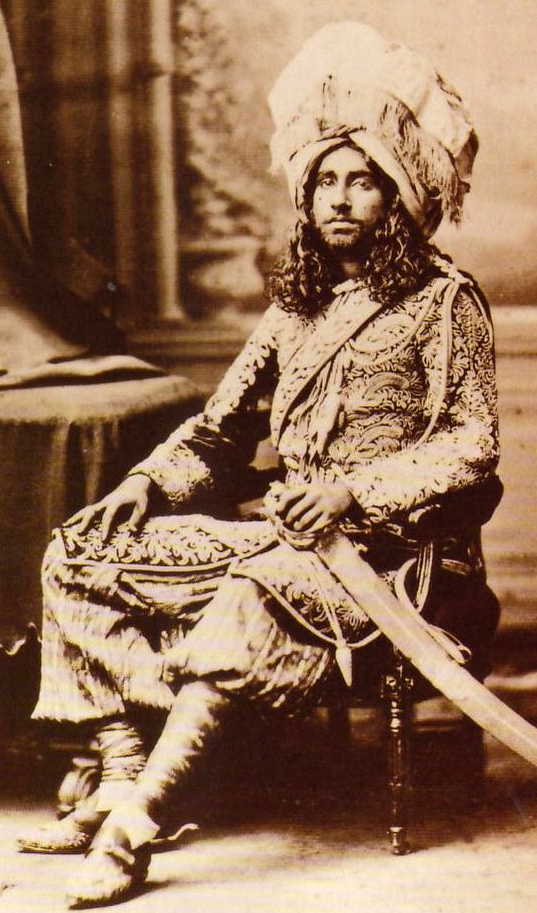
Perhaps inspired by Venetian practices, in the mid-1710s Karl Wilhelm, Margrave of Baden-Durlach (1679–1738), established a large ensemble of Hofsingerinnen—female court singers. Some visitors to his court were scandalized, not least the Duchess of Orléans (Élisabeth Charlotte de Bavière, 1652–1722), who expressed herself repeatedly:
“I have already heard about the ridiculous seraglio maintained by the Margrave of Durlach. According to what I’ve heard lately about our Germans—whether they are princes or aristocrats—they are all as crazy as if they had come out of the madhouse; I am really quite ashamed by this.” (15 December 1718).
“I have heard about the bedlam life led by the Margrave of Durlach; he is completely mad. I fear that he has turned into a complete imbecile; [his lifestyle] has never been crazier…” (13 September 1719)
“The man of letters…will surely be given a leading position in heaven if he can persuade the Margrave of Durlach to abandon his scandalous life and shut down his seraglio.” (4 June 1722)
Due to such accounts, Karl Wilhelm’s courtly lifestyle has inspired visions of Oriental harems to this day, tempting three centuries of historians either to omit the topic intentionally or to misuse it as a way to project their own fantasies.
What could a late–19th-century Viennese symphonic genius and an early–21st-century African American pop star have in common? A blood line, according to recent research that has led to the conclusion that Beyoncé Knowles is Gustav Mahler’s eighth cousin, four times removed.
This according to Why Mahler?How one man and ten symphonies changed our world by Norman Lebrecht (New York: Pantheon, 2010; RILM Abstracts 2010-7889). Below, Beyoncé’s Green light—a title that suggests a line of descent from Mahler’s Urlicht.
The Forschungsinstitut für Musiktheater in Thurnau launched the peer-reviewed, open-access electronic journal Act: Zeitschrift für Musik & Performance (ISSN 2191-253X) in 2010. This international interdisciplinary publication provides a platform for essays, reviews, and columns at the intersections of musicology, theater studies, dance studies, and media studies. Act places particular value on methodological plurality and on supporting young academics.
Appearing twice a year, each issue will comprise two to five essays and an editorial, along with a review section (in the form of review essays) and a section for columns and announcements. The inaugural issue was edited by Anno Mungen and Knut Holtsträter.
Comments Off on Act: Zeitschrift für Musik & Performance
On 15 February 1819 the leading Dutch newspaperNederlandse staatscourant reported that Beethoven had been seriously wounded when he was run over by a carriage. The notice, a translation of a French report issued the day before, used strong language that implied that the internationally revered composer must have been hospitalized with broken bones or a concussion, and could be in mortal danger.
The report was an example of an international game of telephone—successive notices in various countries had piled on exaggerations to sensationalize the story. The earliest report, from the Frankfurter journal on 29 January 1819, was a much blander account:
(The composer van Beethoven, because of his weak hearing, suffered the misfortune of being knocked down and injured.)
It is possible that even this was an exaggerated version of a neighbor’s anecdote from around that time, in which the composer slipped and fell in the mud, and furiously refused to let the laughing bystanders help him to his feet.
This according to “Beethoven run over: A curious traffic accident in early 1819” by Jos van der Zanden (The Beethoven journal XXVI/1 [summer 2011] pp. 26–27).
Above, Beethoven as he often appeared on the streets of Vienna around 1819, depicted by the sculptor Johann Daniel Böhm (1794–1865), a friend of his at the time; below, Evgeny Kissin performs the Rondo a capriccio, op. 129 (“Rage over a lost penny”) as an encore.
In Sonic constructs, two robotic devices move and interact while performing trajectories that produce sound as a by-product of the movement itself. Direction, speed, acceleration, position, scratching, and collision characterize an environment for kinetic and acoustic participation.
On this Columbus Day let’s look back to 1892, when the Milan publisher Francesco Vallardi celebrated the quadricentennial of the explorer’s first voyage with Albo di onoranze internazionali a Cristoforo Colombo, a lavish 406-page volume that presented reproductions of handwritten tributes by diplomats, scholars, and other luminaries.
When the call went out for contributions Verdi’s Otello had recently premiered to great critical acclaim. For his offering he penned a short excerpt from the opera (below).
Early music online is the result of a project aimed at digitizing 300 volumes of the world’s earliest printed music from holdings at the British Library and making them freely available online. The project has focused on the British Library’s holdings of 16th-century anthologies of printed music, as listed in RISM B/I (Recueils imprimés XVI-XVIIsiècles).
These collections printed in Italy, Germany, France, England, and Belgium contain approximately 10,000 works, which have been individually indexed. The volumes mainly comprise vocal polyphony partbooks, but they also include early printed tablatures for keyboard or plucked string instruments.
The digitized books can be browsed via Royal Holloway’s digital repository. Full details of each volume, searchable by composer and by title, with links to the digitized content, can also be found in the British Library Catalogue, UK RISM database, and COPAC.
Above, an excerpt from a work by Jacob Clément (Clemens non Papa) in Le huitiesme livre des chansons a quatre parties, an anthology published in Antwerp by Tylman Susato in 1545 (click to enlarge). Below, Stile Antico sings Clemens’s Ego flos campi.
Darwin’s On the origin of species and Wagner’s Tristan und Isolde, both completed in 1859, share an articulation of the shift from one worldview to another: from change as a repetitive circular movement to development as a cyclic process. Darwin’s treatise is more than a scientific theory—it is an aesthetic account of the wonders and beauty of nature. Wagner’s opera is more than a subjective work of art—it clearly reflects dimensions of evolution akin to scientific explanations of the phenomenon.
The library of the Institut du Monde Arabe (Arab World Institute) in Paris is home to an extensive collection of writings on music from the Arab world, a region stretching from the Atlas Mountains to the Indian Ocean. This series … Continue reading →
The Filipino ethnomusicologist and composer Jose Maceda created unique works that blended his fieldwork on Filipino and other music with his expertise in European avant-garde traditions. His compositions combined innovative techniques such as spatialization, a focus on timbre, and musique … Continue reading →
The Senegalese singer, songwriter, musician, and politician Youssou N’Dour was born just six months before Senegal achieved independence. His mother hailed from a long line of griots, or gawlo, who served as hereditary musicians and custodians of oral history in … Continue reading →
Ellis Marsalis first learned to play the clarinet and saxophone but the piano later became his main instrument. From 1951 to 1955, he completed a bachelor’s degree in music education at Dillard University in New Orleans while receiving informal jazz … Continue reading →