Although Ned Rorem had composed little organ music until he was in his 50s, his output for the instrument since that time has been considerable, making him the most prolific living U.S. composer for the organ.
Rorem says that he writes music that he wants to hear, and composes out of necessity because no one else is making what he needs.
This according to The organ works of Ned Rorem by John David Marsh, a dissertation accepted by Rice University in 2002.
Today is Rorem’s 90th birthday! Below, Jung Jin Kim performs “Mary Dyer did hang as a flag” from A Quaker reader.
Robert Craft progressed with remarkable speed from being Stravinsky’s assistant to serving as his adviser, collaborator, and defender.
While Craft has been castigated for suppressing or misstating information, his actions must be viewed in the context of his complicated relationship with the composer, which has no clear parallel in music history. Craft was ethically bound both to interpret Stravinsky to the outside world and to ensure his status as a 20th-century hero.
This according to “Boswellizing an icon: Stravinsky, Craft, and the historian’s dilemma” by Charles M. Joseph, an essay included in Stravinsky inside out (New Haven: Yale University Press, 2001, pp. 233–265).
Today is Craft’s 90th birthday! Below, he recalls Stravinsky’s California years.
In 1906, at the age of 34, Serge Diaghilev made his first impact on Western Europe with a widely acclaimed exhibition of Russian art in Paris; he followed this success with well-received concerts of Russian music in 1907 and 1908, which included the Western European debut of the celebrated Russian bass Fëdor Ivanovič Šalâpin.
Even these achievements were overshadowed by the rapturous reception of the newly formed Ballets Russes in 1909, which performed the entire second act of Borodin’s Knâz’ Igor’ (Prince Igor), featuring the singing of Šalâpin and the dancing of the now-famous Poloveckie plâski (Polovtsian dances).
In 1913 Diaghilev produced performances featuring Šalâpin in both Paris and London. An archival document from that year records Šalâpin’s payment for an extra performance of Musorgskij’s Boris Godunov in London; at the bottom one can see the singer’s handwritten note: Finito!
This according to “Diaghilev, Chaliapine, and their contracts” by Cecil Hopkinson (The music review XXV/2 [May 1964] pp. 149–53). The article also includes full English translations of Šalâpin’s contracts with Diaghilev for the 1909 and 1913 seasons.
Above, Šalâpin with a different associate in 1929; below, a performance of a scene from Godunov in 1927.
Today, on Big Joe Williams’s 110th birthday, let’s recall how he won over an audience of jaded rockers in 1965:
“Sandwiched in between the two sets, perhaps as an afterthought, was the bluesman Big Joe Williams…
“He looked terrible. He had a big bulbous aneuristic protrusion bulging out of his forehead. He was equipped with a beat up old acoustic guitar which I think had nine strings and sundry homemade attachments and a wire hanger contraption around his neck fashioned to hold a kazoo while keeping his hands free to play the guitar. Needless to say, he was a big letdown after the folk rockers. My date and I exchanged pained looks in empathy for what was being done [to] this Delta blues man who was ruefully out of place.”
“After three or four songs the unseen announcer came on the p.a. system and said ‘Lets have a big hand for Big Joe Williams, ladies and gentlemen; thank you, Big Joe.’ But Big Joe wasn’t finished. He hadn’t given up on the audience, and he ignored the announcer. He continued his set and after each song the announcer came over the p.a. and tried to politely but firmly get Big Joe off the stage.”
“Big Joe was having none of it, and he continued his set with his nine-string acoustic and his kazoo. Long about the sixth or seventh song he got into his groove and started to wail with raggedy slide guitar riffs, powerful voice, as well as intense percussion on the guitar and its various accoutrements. By the end of the set he had that audience of jaded ‘60s rockers on their feet cheering and applauding vociferously. Our initial pity for him was replaced by wondrous respect. He knew he had it in him to move that audience, and he knew that thousands of watts and hundreds of decibels do not change one iota the basic power of a song.”
This according to “Big Joe Blues” by Marc Miller (Blues for peace, 2005). Above, Williams in Hamburg in 1972; below, a close-up performance with his celebrated nine-string guitar.
Directed by Eva Veselovská, the database allows free and universal access to a large number of music manuscripts kept at libraries and archives in Slovakia. It provides a number of search possibilities, including the archive (with RISM sigla), source, text incipit of a chant, feast, and genre searches. Manuscript fragments and selected codices with monophonic or polyphonic music are fully indexed.
To view digital images in high resolution, a free Slovak Early Music Database – Cantus Planus in Slovacia account must be established.
Below, an example from a Slovakian manuscript.
Comments Off on Slovak Early Music Database – Cantus Planus in Slovacia
Archivists at the American Institute for Verdi Studies discovered a document that sheds new light on Verdi’s activity just prior to the composition of his final opera, Falstaff.
A letter from the publisher Giulio Ricordi dated 22 August 1890 congratulates Verdi on the successful launching of a new business devoted to the sale of pork prepared at the composer’s Sant’Agata farm.
Ricordi, having purchased a “G.V. brand” pork shoulder, reports that he found the bill “a bit salty”, but for such exquisite meat he would pay “neither a lira more nor a lira less”.
This according to “New Verdi document discovered” by Martin Chusid (Verdi newsletter XX [1992] p. 23). (The information in this article, delicious as it is, appears to be outdated; see the comment below.)
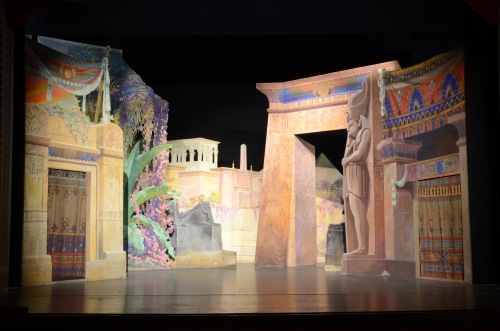
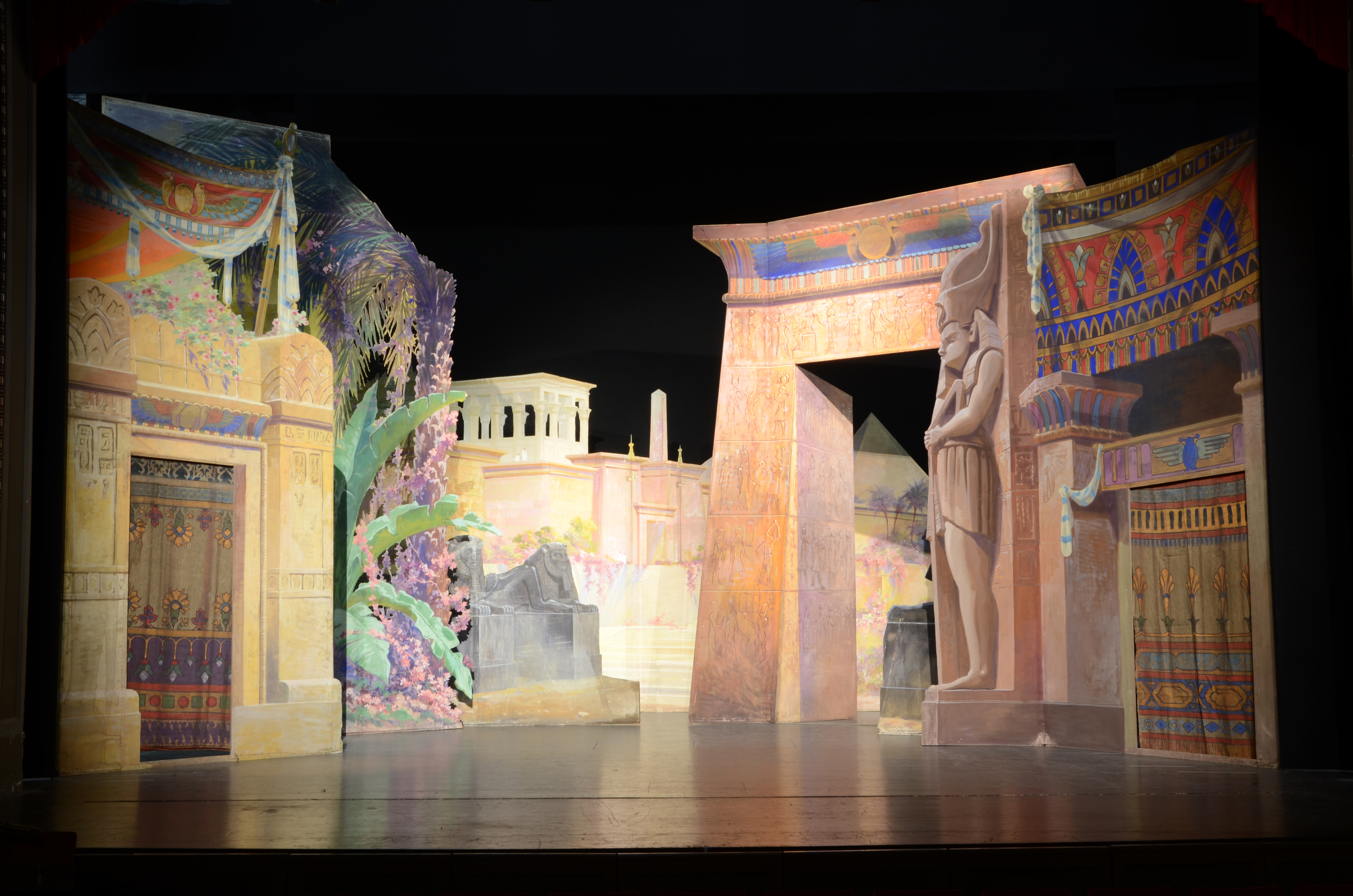
Today is Verdi’s 200th birthday! Below, in Falstaff’s finale, the opera’s characters prepare to dine together—no doubt anticipating the composer’s own homegrown prosciutto.
This resource is divided into separate sections for editions, essay collections, Ordo virtutum, performance practice, and so on. Significant publications of Hildegard’s nonmusical works are included as well.
Above, a detail from a stained glass piece that was once part of Rochuskapelle, just southeast of Bingen. below, the Oxford Camerata performs Hildegard’s Ave generosa.
Launched in 2012, Evental aesthetics is an independent, interdisciplinary, peer-reviewed journal dedicated to philosophical perspectives on art and aesthetics.
Publishing three times each year, the journal invites experimental and traditional philosophical ideas on questions pertaining to every form of art, as well as to aesthetic issues in the non-artworld, such as everyday aesthetics and environmental aesthetics. Each installment of the journal reflects on specific, but broadly defined, aesthetic issues.
This publication is entirely independent and unaffiliated with any institution, and therefore is unimpeded by political or financial agendas. As a non-profit organization, Evental aesthetics operates completely without funding or advertising. The journal is open-access, available for download free of charge.
The first issue includes the music-related article “Hegel’s being-fluid in Corregidora, blues, and (post-) black aesthetics” by Mandy-Suzanne Wong; the full text is here.
Below, John Lee Hooker presents a fine example of blues philosophy.
“Pungmul is played with your heel!” say many celebrated performers of this percussion genre, underscoring the inseparability of the music and the musicians’ dance moves.
Merely listening to the music of pungmul is not sufficient for differentiating between passages where the meter does not change but the instruments play cross-rhythmically and those where the meter does change and the instrumental parts reflect this change. Such passages can only be differentiated through a choreological analysis that demonstrates the relationships between the stepping patterns of the dancing musicians and the music that they are simultaneously playing.
This according to “‘Pungmul is played with your heel!’ Dance as a determinant of rhythmic construct in Korean percussion band music/dance” by Nathan Hesselink (Eum’ag gwa munhwa/Music and culture IV [2001] pp. 99–110). Below, a taste of pungmul from the Gungnip Minsok Bangmulgwan (National Folk Museum) in Seoul.
Charles “Cholly” Atkins was a tap dancing star before the bottom dropped out for the genre in the 1940s.
In 1953 he was hired to coach the Cadillacs on their stage presentation, and he was so successful that he was given a steady job at Motown Records in the early 1960s; he went on to coach and choreograph for their top groups, including The Supremes, The Temptations, and Gladys Knight and the Pips, almost single-handedly keeping much of American vernacular dance alive for a new generation.
This according to “‘Let the punishment fit the crime’: The vocal choreography of Cholly Atkins” by Jacqui Malone (Dance research journal XX/1 [summer 1988] pp. 11–18).
Today is Atkins’s 100th birthday! Below, rehearsing with The Temptations in 1986.
BONUS: The celebrated duo Coles & Atkins (Atkins is on the right).
Comments Off on Cholly Atkins and American vernacular dance
The library of the Institut du Monde Arabe (Arab World Institute) in Paris is home to an extensive collection of writings on music from the Arab world, a region stretching from the Atlas Mountains to the Indian Ocean. This series … Continue reading →
The Filipino ethnomusicologist and composer Jose Maceda created unique works that blended his fieldwork on Filipino and other music with his expertise in European avant-garde traditions. His compositions combined innovative techniques such as spatialization, a focus on timbre, and musique … Continue reading →
The Senegalese singer, songwriter, musician, and politician Youssou N’Dour was born just six months before Senegal achieved independence. His mother hailed from a long line of griots, or gawlo, who served as hereditary musicians and custodians of oral history in … Continue reading →
Ellis Marsalis first learned to play the clarinet and saxophone but the piano later became his main instrument. From 1951 to 1955, he completed a bachelor’s degree in music education at Dillard University in New Orleans while receiving informal jazz … Continue reading →