The inaugural issue includes studies of the reception of Bellini’s operas in 19th-century London, contextual discussions of aspects of Norma and La sonnambula, and a prospectus for a critical edition of the composer’s correspondence.
When Maria Callas returned to Greece to inaugurate the 1957 Athens Festival her demand for an unusually high fee created much antagonism, and she vowed that she would not perform in the country again.
However, in 1959 Κostis Bastias (1901–72) took charge of the administration of the Ethnikī Lyrikī Skīnī (Greek National Theater) and invited Callas to star in an opera in the ancient theater of Epidaurus. Since its opening in 1954, the Epidaurus Festival had only included performances of ancient Greek dramas by Ethnikī Lyrikī Skīnī; performances by other troupes were not allowed.
Finally, Callas consented to present Bellini’s Norma at the festival in 1960, and decided to donate her fee to a scholarship foundation. The performance was a resounding success, and she returned to Epidaurus a year later to present Cherubini’s Médée, further eroding Ethnikī Lyrikī Skīnī’s monopoly.
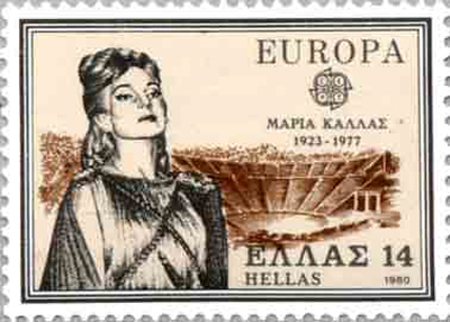
Today is Callas’s 90th birthday! Above, a Greek stamp commemorates her Norma at Epidaurus; below, a slide show includes photographs from the Epidaurus production of Médée.
The Indian singer Jayashri Ramnath (better known as Bombay Jayashri) was introduced to Karnatak music in her early childhood, influenced by her parents’ roles as music teachers. Jayashri began her performing career at the age of 28, and having grown … Continue reading →
The country singer, songwriter, actor, and businesswoman Dolly Parton was the fourth of twelve children in a family of sharecroppers in Sevierville, Tennessee, located in the Appalachian Mountains. Commenting on her childhood, Parton once said, “Everybody where we grew up … Continue reading →
Women have been part of hip hop expression from its early days, primarily as part of MC crews such as the Funky Four Plus One and Sugar Hill’s female group, Sequence. For most of hip hop’s recorded history, however, women … Continue reading →
The music of Central America tends to borrow heavily from the music of Mexico to the north, Colombia to the south, and the Caribbean Islands to the east, and, in the case of Nicaragua, from the politically motivated nueva canción … Continue reading →