Created by Dick Glasgow in 2006, Scots-Irish music presents information on the traditional instruments and music of Ulster, with additional information on the music’s relocation in the U.S. Appalachian region. The site includes numerous links to other online resources relevant to Ulster’s musical traditions.
The giant lambeg drum, above, is typically heard with traditional Ulster fife playing (below).
On 14 January, which is both New Year’s Day and the Feast of St. Basil according to the old Orthodox calendar, villagers in Bulgaria and Macedonia perform the costumed ceremonial dance known as Сурва (Surva, “unripe year”). Children between 4 and 14 years old participate in the малечка Сурва (small Surva), while adults between 15 and 35 perform in the голема Сурва (big Surva).
On the eve of the event, youths go from house to house collecting wood for the ceremonial bonfire. In the morning the participants choose their roles and don the corresponding masks and sheepskin capes. The stock characters may include a groom, a bride, a devil, a priest, a gypsy, and a dancer with a bear. To the accompaniment of drums and shawms, the dancers parade through the village with abundant comical antics. The ceremony culminates with a spirited dance around the collective bonfire.
This according to “Сурварските обичаи од неколку струмички села” (Old customs performed on New Year’s day in villages of the Strumičko region) by Ivan Kotev, an essay included in Rad XIX kongresa Saveza Udruženja Folklorista Jugoslavije (Skopje: Združenie na Folkloristite na Makedonija, 1977, pp. 207–212). Below, Surva in Krupnik, Bulgaria.
In Macedonia the Synaxis of St. John the Baptist on 7 January is celebrated with Vodici, a musical ceremony that involves the high priest throwing a cross into a nearby body of water.
The waters are baptized through this act, but the real attraction is the local youths plunging into the icy water to retrieve the cross. The one who finds it becomes a local hero, and is believed to be blessed for the entire ensuing year.
This according to “Водичарски обреди и водичарско певање у Македонији” (The Vodici ritual and singing in Macedonia) by Rodna Veličkovska in Научни скуп Дани Владе Милошевића: Зборник радова (The conference Dani Vlade Miloševića: Collection of essays; Banja Luka: Akademija Umjetnosti, 2008).
Below, excerpts from the church and waterside ceremonies in Bitola.
Seosamh Ó hÉanaí (Joe Heaney, 1919–84) was considered by many to be the finest Irish traditional singer of his generation. Born and raised in rural western Ireland, over his lifetime he brought his vast repertoire of sean-nós (old-style) songs and stories, and his majestic, richly ornamented performances of them, to audiences around the world.
On 17 November 2010 Na Píobairí Uilleann launched Na Píobairí Uilleann: Source, an Internet resource that includes Irish music web tutors, Irish music collections dating back to 1724, reed-making and pipe-making videos, recitals, and historical data on iconic musicians.
While the site is specifically intended to support students of uilleann piping, pipe-making, and maintenance, it includes material of interest to players of other traditional instruments, traditional singers, and all lovers of Irish traditional music.
Source is a free collection; membership in Na Píobairí Uilleann enables use of organizational tools to create personal bookmarks and galleries. Content will be added regularly, and the site’s design provides for possible future enhancements such as the ability for members to upload and share their own content.
Many thanks to Patrick Hutchinson for bringing this to our attention! Below, Séamus Ennis plays Pat Ward’s jig on the uilleann pipes.
Sephardic music: A century of recordingsshowcases and discusses over 100 years of recorded Sephardic music, from the 78 rpm era to the present. Created by Joel Bresler, this resource includes information on repertory and performance practice and a comprehensive discography of Sephardic 78s in Hebrew and Ladino ordered by label, song, or artist. Numerous illustrations are provided, including reproductions of record labels and covers.
Above, the label from Haim Effendi’s 1907 recording of the popular Sephardic song A la una; the recording can be heard here.
Comments Off on Sephardic music: A century of recordings
In his 1882 unpublished essay Die Eigenthümlichkeiten der magyarischen Volksmusik, Franjo Ksaver Kuhač (1834–1911) used and explained the term musicology. Since the Vierteljahrsschrift für Musikwissenschaft appeared three years later with Guido Adler’s definition of the term, Kuhač assumed—and he died with this conviction—that he was the first to have coined it.
Kuhač was also an early visionary in comparative musicology, a stream that fed into the beginnings of ethnomusicology. As he saw it, the discipline’s task was to determine the laws of any given nation’s traditional music so these could be used as the basis for a national style in art music; his overarching goal was to create an awareness of Croatian national music and to establish its place in the context of Central European culture.
This according to “Franjo Ksaver Kuhač and the beginnings of music scholarship in Croatia” by Zdravko Blažeković, an essay included in our recently published Music’s intellectual history.
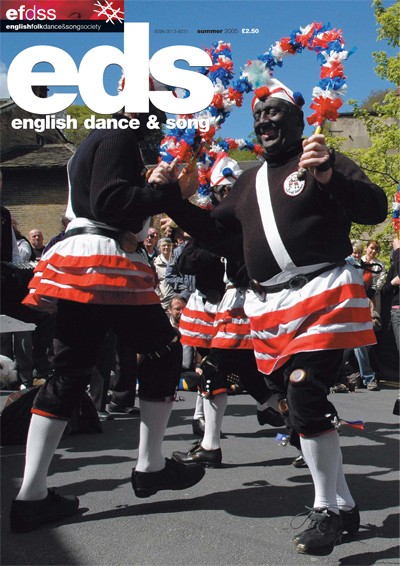
Published by the English Folk Dance and Song Society, English dance & song has appeared at least four times a year since it was launched in 1936. The magazine presents festival listings and other news, interviews with current English traditional and neotraditional performers, and reviews of current publications, as well as brief research-based articles that explore historical documents and current practices.
The magazine provides insight into the Serbian world music scene through interviews and profiles of members of Serbian bands and reviews of recordings, events, and publications, as well as regular features on Serbian traditional music.
Its editor, Oliver Đorđević, defines it as a periodical for “theory, history, aesthetics, and criticism of world music, with the aim of promoting and advancing Serbian world music.” Etnoumlje also collects information for a future Web-based register of Serbian world music bands and artists.
Comments Off on Etnoumlje: Srpski world music magazine
The country singer, songwriter, actor, and businesswoman Dolly Parton was the fourth of twelve children in a family of sharecroppers in Sevierville, Tennessee, located in the Appalachian Mountains. Commenting on her childhood, Parton once said, “Everybody where we grew up … Continue reading →
The steel drum, or steelpan, developed in Trinidad in the late 1930s, is not a drum but a tuned idiophone, akin to a tuned gong. Unlike membranophones, the steel pan does not have a vibrating membrane. Its creation process involves … Continue reading →
Performances of Aboriginal musical traditions have become widespread in various national and international contexts and are significant to the ways in which Aboriginal people from distinct regions project their specific identities to a broader world. In recent decades, Warlpiri people, … Continue reading →
The musical style associated with the bamboo frame rattle called angklung embodies the egalitarian cooperation so essential for the agriculture that sustained Sundanese people in West Java for centuries. In the early twentieth century, Indonesian nationalists reimagined the sound of … Continue reading →



 On the eve of the event, youths go from house to house collecting wood for the ceremonial bonfire. In the morning the participants choose their roles and don the corresponding masks and sheepskin capes. The stock characters may include a groom, a bride, a devil, a priest, a gypsy, and a dancer with a bear. To the accompaniment of drums and shawms, the dancers parade through the village with abundant comical antics. The ceremony culminates with a spirited dance around the collective bonfire.


 Seosamh Ó hÉanaí