Tag Archives: India

Rāgamālā paintings

Bhairavi

Rāgamālā painting is a form of iconography that arose around 1600 in northern India.

These visual depictions of rāgas involve the various extramusical associations that theorists have assigned to them; for example, this visualization of the Hindustani rāg bhairavī from about 1610 depicts women worshiping at a shrine to Śiva, embodying the rāga’s association with both Śiva and feminine energy, and evoking the colors of its traditional early-morning context.

Below, the śahnāī player Bismillāh Khān (1915–2006) renders rāg bhairavī.
Comments Off on Rāgamālā paintings

Filed under Asia, Iconography

Postage stamps

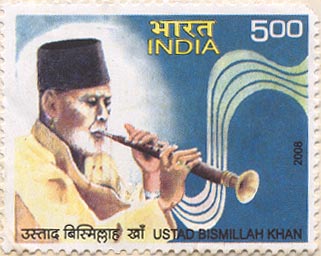
Postage stamps are singular sources for music iconography. Since these images comprise officially sanctioned national and international recognition, they provide windows on what governments and constituencies in various cultures and at various times have deemed worthy of celebration.

For example, the South Indian magazine Sruti regularly features philatelic reports on stamps issued by the Indian Department of Posts; these include an impressive number of commemorations of composers and performers from India’s classical Karnatak and Hindustani traditions. The stamp pictured above was issued to honor the śahnāī player Bismillāh Khān (1915–2006) on 21 August 2008.

Below, the music of Ghanaian postal workers canceling stamps.

Related article: Music stamps redux

Comments Off on Postage stamps

Filed under Asia, Iconography, Reception

Sruti

Sruti: India’s premier magazine for the performing arts (ISSN 0970-7816) is a Chennai-based magazine. While its primary focus is the South Indian Karnatak music world and its related dance traditions, most issues include at least one article devoted to the North Indian Hindustani tradition; it also carries occasional features on Indian folk traditions. Sruti tends to concentrate on events in recent musical life and profiles of current—and occasionally past—performers. RILM focuses on covering the latter, including the former only when sufficient historical interest is indicated.

Research-based contributions from the independent scholar Sriram Venkatakrishnan (writing under the name Sriram V) are often included, providing notes on important persons or places in the history of the Karnatak tradition. Another regular contributor, S. Sankaranarayanan, writes philatelic reports on Indian stamps depicting musical subjects—a type of music iconography.

2 Comments

Filed under Asia, Dance, Dramatic arts, Music magazines, Reception