Émile Waldteufel (1837–1915) served as pianist to Empress Eugénie and was renowned as a composer of elegant polkas, waltzes, and other occasional pieces. His Pluie d’or valse (Golden shower waltz, op. 160) is one of several of his works that won acclaim beyond the court of Napoleon III.
Further information on Waldteufel and his family can be found in Skaters’ waltz: The story of the Waldteufels by Andrew Lamb (Croydon: Fullers Wood Press, 1995).
The WordPress.com stats helper monkeys prepared a 2015 annual report for this blog.
Here’s an excerpt:
The Louvre Museum has 8.5 million visitors per year. This blog was viewed about 77,000 times in 2015. If it were an exhibit at the Louvre Museum, it would take about 3 days for that many people to see it.
The specification of instruments in vocal-instrumental compositions began in the final decades of the 16th century in Italy and gained momentum in the early decades of the 17th, including in church music. Trombones, in particular, were increasingly specified and often used interchangeably with voices.
Seventeenth-century Italian motets with trombones, edited by D. Linda Pearse, (Middleton: A-R Editions, 2014) is a new edition of concerted motets composed between 1600 and 1640 with explicitly labelled parts for trombones; the works are small scale, containing fewer than eight parts (excluding basso continuo). Unlike other editions of similar repertoire, the works selected here provide a representative sample of a significant repertoire and present music of high quality by lesser-known composers whose output is largely unavailable.
Below, Carlo Fillago’s Confitemini Domino, one of the motets included in this edition, performed by ¡Sacabuche!
Comments Off on Seventeenth-century Italian motets with trombones
It is no longer accurate to call Elvis Costello a rock star. Rather, he is a professional omnivore—a master, for better and worse, of eclecticism.
Costello presents himself as much as a fan as a participant, and his participation is relentless. He has evolved into one of the most spirited accomplices in tribute gigs, variety evenings, and extracurricular combinations.
This according to “Brilliant mistakes: Elvis Costello’s boundless career” by Nick Paumgarten (The New Yorker LXXXVI/35 [8 November 2010] pp. 48–59.
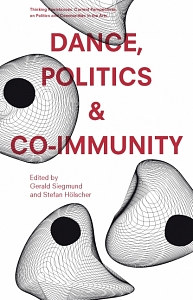
In 2013 Diaphanes launched the series Thinking resistances: Current perspectives on politics and communities in the arts with Dance, politics & co-immunity.
The volume explores the multiple connections between politics, community, dance, and globalization from the perspectives of dance, theater studies, history, philosophy, and sociology. Edited by Gerald Siegmund and Stefan Hölscher, the collection comprises papers presented at an international symposium with the same title that was held in 2010 at Justus-Liebig-Universität Gießen.
Below, an excerpt from Xavier Le Roy’s Le sacre du printemps, one of the works discussed in the book.
The score was effectively re-composed for the later film, with Bernstein taking its basic components and redeploying them in often entirely new musical and filmic contexts, while also combining them with his own newly composed music and further preexisting material from Herrmann’s rejected score for Hitchcock’s Torn curtain (1966).
Bernstein later said that Scorsese “wanted the atmosphere that [Herrmann’s 1962 score] provides” and that it was “much more appropriate for the remake…the first film was not up to the strength of that score.”
This according to “Cape Fear: Remaking a film score” by Jonathan Godsall (The soundtrack IV/2 [2011] pp. 117–135). Below, Cady’s ill-advised release from prison.
The music used in the coverage of the aftermath of the events of 11 September 2001 by two leading 24-hour news networks—CNN in the U.S. and CBC Newsworld in Canada—illuminates the politics of news music and puts the subject in a transnational (if specifically North American) perspective.
Distinct musical responses to 9/11 branded each network’s coverage. While CNN’s music communicated a message of fear and anger to American news consumers, Canadians received sounds and images that invoked the horror and tragedy of the event.
Foregrounding the role of music in this comparison adds a revealing dimension to the story of how networks attempt to tap into the personal narratives of viewers, whether to reflect the mood of the country (and thus ensure market share) or to convince the audience of their particular take on the news.
This according to “The sounds of American and Canadian television news after 9/11: Entoning horror and grief, fear and anger” by James A. Deaville, an article included in Music in the post-9/11world (New York: Routledge, 2007, pp. 43–70).
Below, an excerpt from CNN’s coverage the day after the attacks.
The Indian singer Jayashri Ramnath (better known as Bombay Jayashri) was introduced to Karnatak music in her early childhood, influenced by her parents’ roles as music teachers. Jayashri began her performing career at the age of 28, and having grown … Continue reading →
The country singer, songwriter, actor, and businesswoman Dolly Parton was the fourth of twelve children in a family of sharecroppers in Sevierville, Tennessee, located in the Appalachian Mountains. Commenting on her childhood, Parton once said, “Everybody where we grew up … Continue reading →
Women have been part of hip hop expression from its early days, primarily as part of MC crews such as the Funky Four Plus One and Sugar Hill’s female group, Sequence. For most of hip hop’s recorded history, however, women … Continue reading →
The music of Central America tends to borrow heavily from the music of Mexico to the north, Colombia to the south, and the Caribbean Islands to the east, and, in the case of Nicaragua, from the politically motivated nueva canción … Continue reading →